Being a NeuroQueer Ally Isn’t as Simple as It Sounds
Let’s be honest: a lot of people think being an ally is easy. You show up to Pride, you’re friendly, you don’t start arguments, you wear a cute badge — job done, right?
Not quite.
If you’ve ever spent real time with NeuroQueer people, you already know there’s a whole layer of experience that doesn’t get talked about enough. And if you haven’t, that’s okay — this is exactly why allyship matters.
Because being a NeuroQueer ally isn’t about being perfect. It’s about being present.
It’s Not Just About Pride Events
Pride is great. It’s colourful, loud, joyful, chaotic — and that can also be problem for some NeuroQueer folks.
Crowds, noise, unpredictable sensory input, social expectations… it can be a lot. Sometimes too much.
So while you might be having the time of your life, your NeuroQueer friend might be quietly trying not to shut down. Or they might not be there at all because the environment just isn’t accessible for them.
Being an ally means recognising that “support” doesn’t always look like showing up to the same events. Sometimes it looks like:
- choosing a quieter meetup
- checking in before assuming someone wants to attend
- understanding that “fun” isn’t universal
One size doesn’t fit all — and that’s okay.
The Barriers NeuroQueer People Face Are Real
Even inside LGBTQIA+ spaces, NeuroQueer people can hit walls that others don’t notice. Things like:
- Sensory overload from lights, music, crowds
- Social burnout from masking or trying to keep up
- Misinterpretation of tone, body language, or communication style
- Feeling judged for being “too quiet,” “too blunt,” or “too much”
- Being overlooked because neurodivergence isn’t always visible
- Gatekeeping around what “counts” as queer enough or social enough
These aren’t small things. They shape how safe, welcome, and understood someone feels.
Listening Matters More Than You Think
One of the best things you can do as an ally is simply… listen.
Not the kind of listening where you’re waiting for your turn to talk. The kind where you’re actually trying to understand what someone is telling you about their experience.
And here’s something that’s genuinely helpful: If you don’t understand, say so.
There’s nothing wrong with admitting you’re unsure. It’s actually respectful. It shows you’re not making assumptions or pretending you “get it” when you don’t.
Ask questions gently. Ask because you care. Ask because you want to learn, not because you want to debate.
NeuroQueer people don’t need you to be an expert. They just need you to be honest.
You’re Going to Get Things Wrong Sometimes — Everyone Does
Let’s be real: nobody gets it right all the time. Not me, not you, not anyone.
You will say the wrong thing at some point. You will misunderstand something. You will make a mistake. That doesn’t make you a bad ally — it makes you human.
What matters is what you do next:
- Do you listen?
- Do you apologise without making it about yourself?
- Do you try again?
Showing that you care enough to learn is already a huge step. You don’t need to be perfect. You just need to be willing.
Allyship Is Personal — And NeuroQueer People Deserve Personal Support
NeuroQueer experiences aren’t identical. What helps one person might overwhelm another. What feels supportive to one person might feel intrusive to someone else.
So the best thing you can do is ask:
- What do you need?
- How can I support you?
- What makes you feel comfortable?
Allyship isn’t a checklist. It’s a relationship. It’s a conversation. It’s a willingness to adapt.
If You Care Enough to Try, You’re Already Doing Something Good
Being a NeuroQueer ally isn’t simple — and honestly, that’s what makes it meaningful. It’s not performative. It’s not about looking supportive. It’s about being supportive in ways that actually matter.
You don’t have to know everything. You don’t have to get everything right. You just have to care — and keep caring.
That’s where real allyship starts.
We have a bunch of useful resources that may help you on your journey as an ally, and even a forum where we can all get together. Just follow the below links:
Thanks for reading, Jake – NeuroQueer Ally 🙂
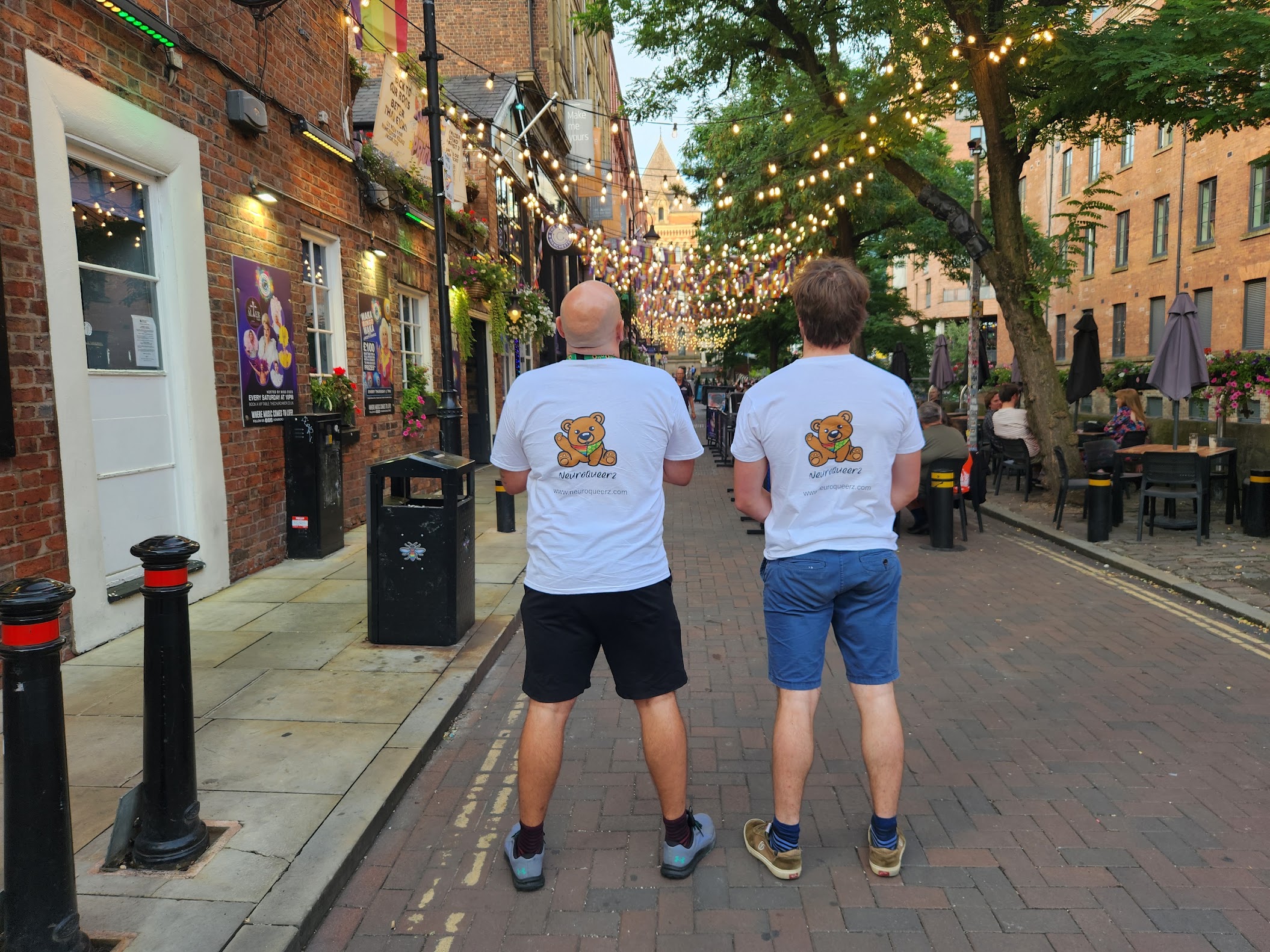
PS… and this is important. Being an Ally has helped me in equal measure to what I have put in… and its been a whole lot of fun along the way 🙂 The below core memory is an example of the smiles and laughs we’ve had


Responses